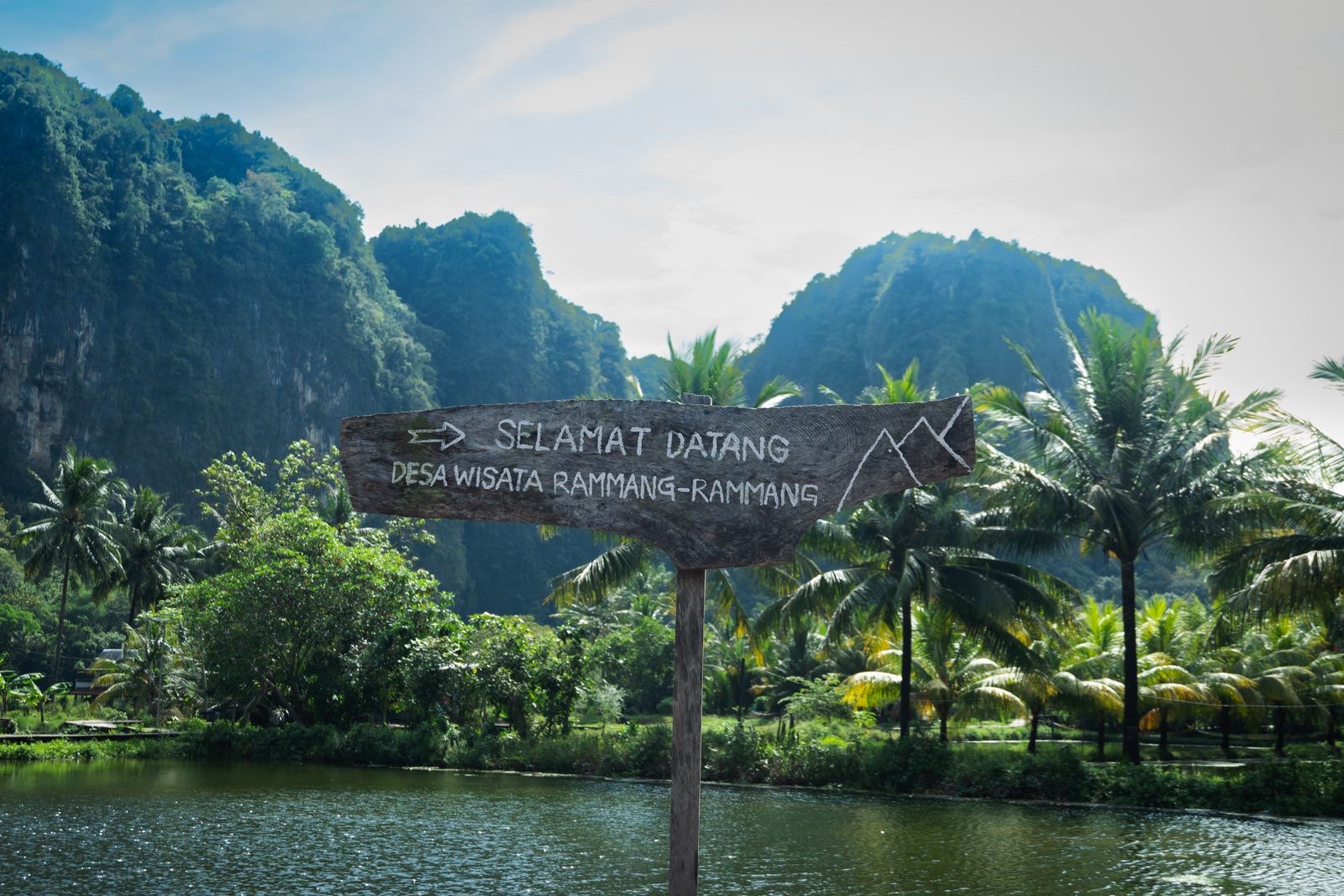
What Rammang-Rammang is
North of Makassar, the plains of Maros and Pangkep end against a wall of limestone. This is the Maros-Pangkep karst: steep towers, cliffs and caves rising out of rice fields and mangroves. Rammang-Rammang is a village on its edge, in Maros Regency, where the Pute River winds into the karst.
In May 2023 UNESCO designated the area the Maros Pangkep UNESCO Global Geopark, for its geology and for the archaeological and cultural sites inside it.
The boat ride on the Pute River
Boats leave from the jetty in Rammang-Rammang village. The narrow wooden boats take a few people each and follow the river past nipa palms and mangroves, then between karst walls, until the valley opens out at Berua. The ride takes around 20 minutes each way, a little longer if you stop for photos.
Boat prices are set locally per boat and change, so we confirm them on the day.
Berua village
Berua is a small hamlet of houses, rice fields and ponds set inside a ring of karst cliffs, reached mainly by boat. The paths between the fields are mostly flat and easy to walk. On a still morning the cliffs reflect in the ponds.
Remember that Berua is a place where people live and work. Ask before photographing people or homes, and buy a drink or snack from the local stalls if you stop. Basic homestays exist for those who want to stay for sunrise.
Wear sandals or shoes that can get wet and muddy, and carry water. There is little shade between the fields.
Cave art at Leang-Leang and in the Maros karst
The caves of the Maros-Pangkep karst hold red rock paintings and hand stencils made by people tens of thousands of years ago. Their dating has changed what archaeologists know about early art:
- Leang Timpuseng: a hand stencil dated in 2014 to at least 39,900 years ago.
- Leang Tedongnge: a painting of warty pigs dated in 2021 to at least 45,500 years ago.
- Leang Karampuang: a scene with a pig and human-like figures dated to at least 51,200 years ago, in a study published in Nature in 2024.
These are minimum ages, and new studies keep revising them. The place most visitors go to see cave art is the Leang-Leang archaeological park, roughly 30 minutes by road from Rammang-Rammang, where Leang Pettakere has red and white hand prints on its ceiling.
How to get there
- From the airport: Sultan Hasanuddin International Airport (UPG) is about an hour by car from Rammang-Rammang, around 32 km.
- From central Makassar: allow about an hour and a half, more in heavy traffic.
- Getting around: public transport is limited, so a private car and driver is the easiest way to combine the river, Berua and Leang-Leang in one day.
Rammang-Rammang is on the road between Makassar and Toraja, which makes it an easy stop on the first or last day of a Toraja trip. See the getting there page for routes.
Best time of day and of year
Go early. In the first hours after sunrise the air is cooler, the water is calmer and the reflections at Berua are best. By midday the heat is strong and there is little shade. If you stay overnight in the village, you can be on the water before the first day visitors arrive.
Around Makassar the dry season runs roughly from May to October, and the wettest months are December to February. In the dry season the paths are easier; in the wet season the rice fields are greener but some tracks get muddy. More in our best time to visit Sulawesi guide.
A half day or a full day
- Early start from Makassar or the airport.
- Boat ride on the Pute River and a walk in Berua.
- Lunch in Maros.
- Leang-Leang archaeological park in the afternoon, or continue north towards Toraja.
We include Rammang-Rammang in private South Sulawesi itineraries; see the Custom Toraja Trip, our Rammang-Rammang page and the Tana Toraja guide.
FAQ
How far is Rammang-Rammang from Makassar?
About an hour by car from Makassar's airport (UPG) and about an hour and a half from the city centre.
How long is the boat ride to Berua?
Around 20 minutes each way on the Pute River, plus time for photos and a walk in the village.
Can I see the cave paintings at Leang-Leang?
Yes. The Leang-Leang archaeological park, about 30 minutes from Rammang-Rammang, has hand prints you can see in Leang Pettakere. Ask locally which other caves are open to visitors.
What is the best time to visit Rammang-Rammang?
Early morning, for cooler air and reflections, and preferably in the drier months from about May to October.

We organise private trips across Sulawesi from our base in Tomohon, near Manado: Bunaken, Tangkoko and the Minahasa highlands every week, Toraja and Banggai on request. These guides come from the questions our travellers ask us most.