What happens at Botubarani
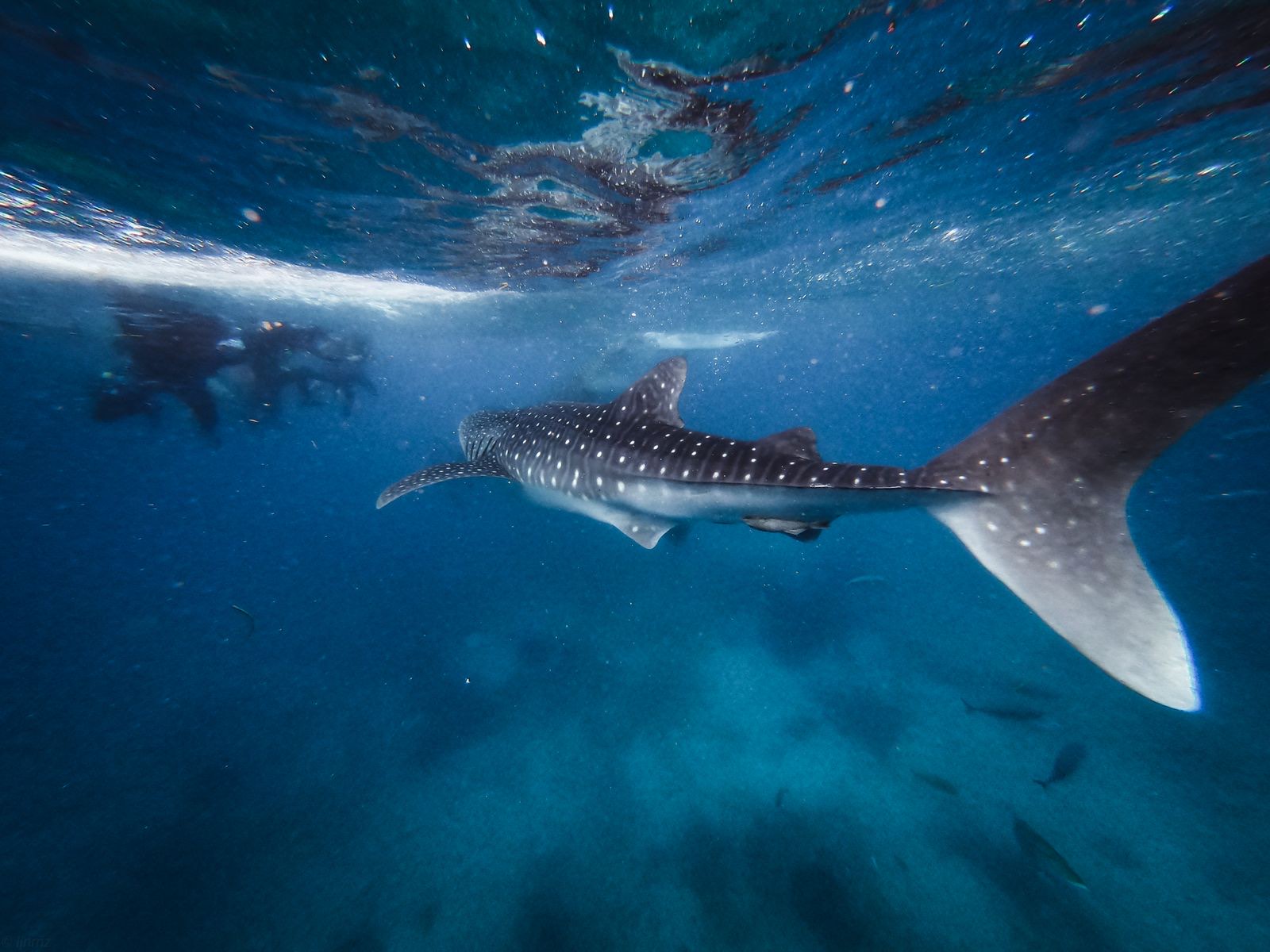
Botubarani is a village in Kabila Bone district, Bone Bolango Regency, on the Gulf of Tomini just east of Gorontalo city. Whale sharks (Rhincodon typus) come into the shallow water here, often close enough to the shore that a short ride in a local fishing boat is all you need. A 2025 report described sharks visible about 25 metres from the beach.
The animals seen here are juveniles and sub-adults, mostly between three and eight metres long. Researchers had identified 59 different individuals by 2024, with up to 20 recorded in a single day. A WWF-Indonesia study in 2016 found that all 19 sharks identified that year were male. The species is listed as Endangered by the IUCN.
A visit usually means floating at the surface with a mask and snorkel while one or more sharks feed nearby. Certified divers can also go down with an official guide, and some visitors simply watch from the boat.
Why the whale sharks come so close
The honest answer is that it is not fully understood. The sightings became widely known in 2016, and they have been linked to a shrimp processing plant on this coast that discharges shrimp heads and skins into the sea, and to the practice of feeding the sharks those scraps for tourists. WWF-Indonesia's researchers treated both as hypotheses that needed more study.
Local fishers say whale sharks have gathered here for at least 70 years, long before the factory. Scientists who assessed the area as an Important Shark and Ray Area also point to nike, tiny fish that appear for a few days each month from June to August and that the sharks feed on.
What is clear is that provisioning changes behaviour. WWF-Indonesia reported that the sharks learned to approach boats for food, that more than 100 kg of shrimp waste could be thrown into the water in one day, and that the scraps made the water murky.
When to go
- Season: whale sharks have been recorded at Botubarani in every month, with a peak from May to August. Some years they leave for weeks; in 2016 they vanished from mid-August and returned in October.
- Time of day: sharks have been seen from morning to evening. We usually go in the morning, but there is no fixed best hour.
- No guarantees: sightings are never certain. Ask in the village the day before, and keep a spare day in your plan.
If you are flying in only for the whale sharks, check recent sightings with us before you book. We ask our contacts on the coast in the days before your trip.
Rules and etiquette in the water
When the site reopened in 2016 after a short closure, the local administration set up a protection zone of about one hectare near the shore, banned motorboats inside it and banned visitors from touching or feeding the sharks. Divers may only go in small groups with official guides. Limits on the number of boats and on time at the site have also been reported, though not always enforced. Rules can change, so follow what the village team tells you on the day.
On top of the local rules, this is how we ask our travellers to behave:
- Never touch, chase or ride a whale shark, and keep well clear of the tail.
- Do not swim into its path. Let it pass and move aside if it comes towards you.
- No flash photography.
- Do not throw food into the water, and do not ask the boatman to do it.
- Enter the water quietly from the boat and stay calm at the surface.
- Take all plastic and rubbish back with you.
Is it ethical?
This is a fair question and travellers ask it often. Feeding wild sharks so that tourists can see them is controversial, because it teaches the animals to associate boats with food and can keep them in an area for longer than they would stay naturally. WWF-Indonesia's message on Gorontalo was that tourism should mean people looking for whale sharks, and not whale sharks being drawn to people.
If you decide to go, you can reduce your impact: choose operators who respect the protected zone, refuse to take part in feeding, keep your time in the water short and follow the guidelines above. If the boats around you are crowding the animals, it is fine to leave early.
How to get there
- By air: Djalaluddin Airport (GTO) is about 24 km from Gorontalo city centre and has domestic flights from Jakarta, Makassar and Manado, among others. Schedules change, so check current routes.
- To Botubarani: from central Gorontalo it is 30 to 45 minutes by road. Add the drive from the airport into the city.
- From Manado: Gorontalo is a long drive west of Manado, so most travellers fly. See our getting there page for routes across Sulawesi.
Combining it with Olele Marine Park
The whale shark area lies on the same Bone Bolango coastline as Olele, a marine protected area known for coral reefs that drop steeply into deep water and for its sponge formations. Olele is a good second half of the day, or a second day, for snorkelers and certified divers. Read more on our Gorontalo page.
Planning a trip with us
We do not run a fixed tour to Gorontalo. We plan custom trips on request: flights, a driver, the boat at Botubarani, a guide for Olele and accommodation in the city. Write to us through the contact page with your dates and we will tell you what is realistic. If you are also visiting North Sulawesi, our guide on how to plan a trip to Sulawesi shows how the regions fit together.
FAQ
When is the best time to see whale sharks in Gorontalo?
Whale sharks have been recorded at Botubarani in every month, with most sightings from May to August. They do not appear every day, so keep a spare day.
Are whale shark sightings at Botubarani guaranteed?
No. They are frequent in some periods and absent for weeks in others. Check recent sightings locally before you travel.
Can I touch or feed the whale sharks?
No. Local rules ban visitors from touching or feeding them, and motorboats may not enter the protected zone.
How far is Botubarani from Gorontalo?
About 30 to 45 minutes by road from central Gorontalo. The airport (GTO) is about 24 km from the city centre.

We organise private trips across Sulawesi from our base in Tomohon, near Manado: Bunaken, Tangkoko and the Minahasa highlands every week, Toraja and Banggai on request. These guides come from the questions our travellers ask us most.